Water Heater & Tankless Systems
Tankless Water Heater Installation
Converting from a tank, replacing an aging tankless unit, or planning hot water for a remodel — we size it correctly, run the gas and venting to code, and test it before we leave.

Endless hot water — when it’s installed right
A tankless water heater heats water as you use it instead of keeping a large tank hot around the clock. Done well, that means hot water that doesn't run out halfway through the second shower, a unit that hangs on the wall instead of taking up floor space, and a longer service life than most tank heaters.
Done poorly, it means lukewarm showers, error codes, and a unit that shuts itself off. The difference is almost always in the installation: whether the unit was sized for the home's real hot water demand, whether the gas line can actually deliver enough fuel, and whether the venting and condensate drain were run properly. Those are exactly the parts our team pays attention to.
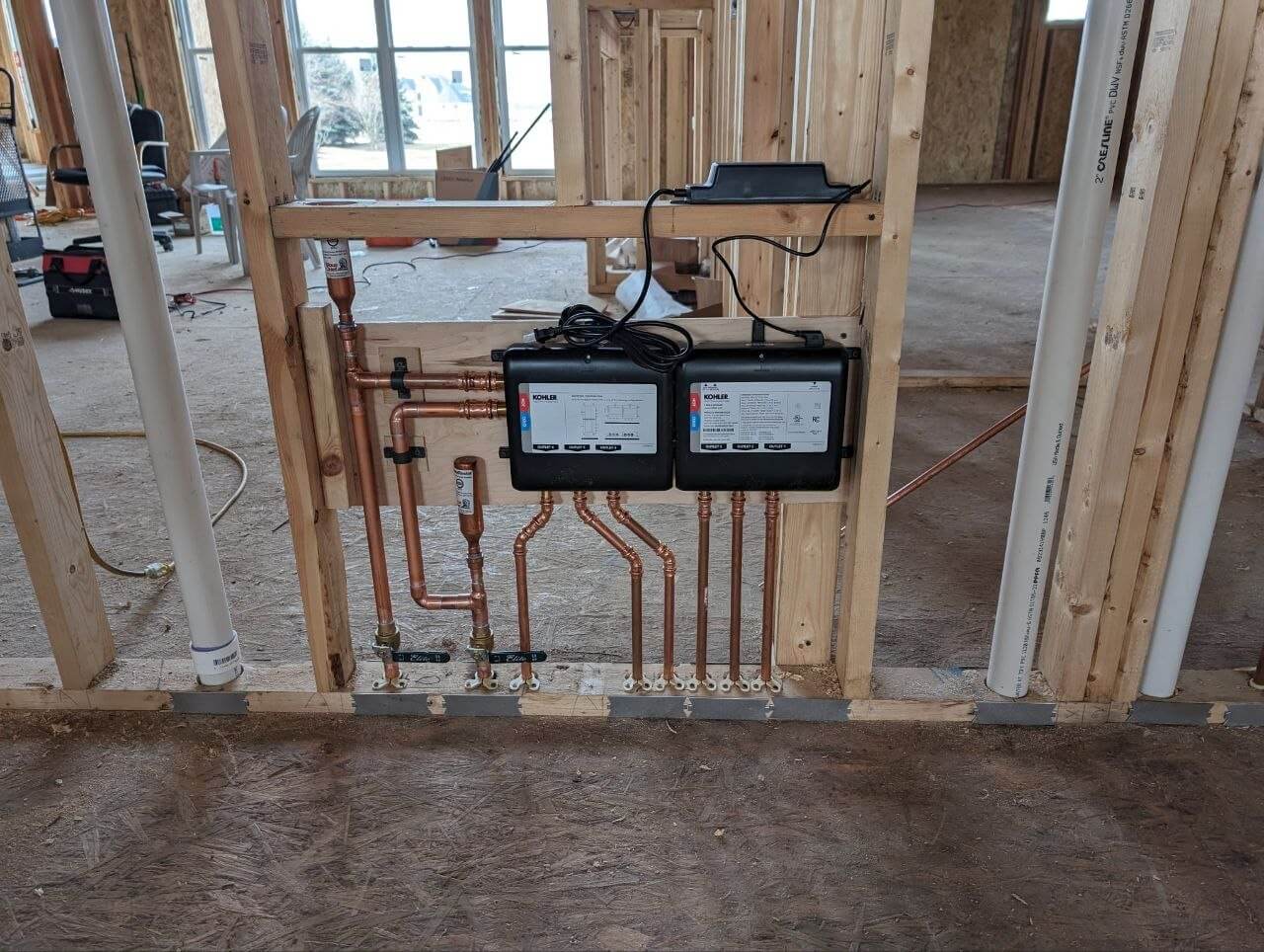
We install tankless units as new conversions from a tank water heater, as replacements for older tankless units, and as part of new construction and remodel plumbing. For larger homes we also install two units working together, like the setup in the photo above.
What’s Included
Here’s what this service covers.
- Tank-to-tankless conversions
- Replacement of older tankless water heaters
- Sizing based on your fixtures and household hot water use
- Gas line sizing and upgrades where the existing line is too small
- Venting and condensate drain installed to code
- Isolation (service) valves for future maintenance and descaling
Is tankless the right choice for your home?
Tankless isn't automatically the best choice for every house, and we won't pretend it is. It tends to make the most sense when:
- Your household regularly runs out of hot water with a tank heater.
- You want to free up floor space in a basement or utility room, especially before finishing a basement.
- Your current tank is near the end of its life and you plan to stay in the home for years.
- You're remodeling or building and can plan the gas line and venting from the start.
A conventional tank may still be the better value when the gas line would need a long, expensive upgrade, when venting options are limited, or when a same-size tank swap already meets your family's needs. We'll walk through both options and give you a straight answer — see our water heater installation and repair page for tank options.
What goes into a proper tankless installation
Sizing
Tankless units are sized by flow rate — how many gallons per minute they can heat at once — not by gallons stored. We look at how many showers, tubs, and appliances might run at the same time and how cold the incoming water gets in winter, which matters in the Chicago area because colder incoming water means the unit has to work harder.
Gas supply
Most gas tankless units need considerably more gas at full output than a typical tank heater. An existing gas line that worked fine for the old tank is often too small. We check the line size and run length and, when needed, upgrade the line as part of the job — the same pressure-tested, code-compliant work we do on our gas line installations.
Venting and condensate
Many modern tankless units are high-efficiency condensing models that vent through PVC and produce condensate that has to be drained properly. We plan the vent route and termination location so it meets code and the manufacturer's clearances.
Serviceability
We install isolation valves so the unit can be flushed and descaled in the future without cutting pipe. Our area's water carries minerals that build up inside the heat exchanger over time, and periodic descaling helps a tankless unit keep performing.
What affects the cost of a tankless installation
We'll give you a clear price before we start. The biggest factors are:
- Whether it's a conversion from a tank or a replacement of an existing tankless unit
- The size and model of the unit (or whether two units are needed)
- Gas line upgrades needed to supply the unit
- Vent route length and where the vent can terminate
- Condensate drain routing
- Permit requirements in your town
Scheduled appointments booked in advance get 10% off, and we work weekday evenings and weekends by appointment.
Recent Work
Workmanship that speaks for itself.

Frequently Asked
Questions homeowners usually ask.
How long does a tankless conversion take?
A straightforward replacement of an existing tankless unit is often a single visit. A conversion from a tank usually takes longer because of gas line, venting, and condensate work. We’ll give you a realistic timeline with your quote.
Will I need a bigger gas line for a tankless water heater?
Often, yes. Many gas tankless units need more gas at full output than a tank heater, so the existing line may be undersized. We check the line size and run length and include any needed upgrade in the quote.
Does a tankless water heater really never run out of hot water?
It won’t run out the way a tank does, but it can only heat a certain number of gallons per minute. That’s why sizing matters — we size the unit for the fixtures you actually use at the same time.
Do tankless water heaters need maintenance?
Yes. Minerals in the water build up inside the unit over time, so periodic flushing and descaling helps it keep working efficiently. We install service valves to make that easy.
Can you install two tankless units together?
Yes. Larger homes with high hot water demand sometimes use two units working together, and we install those setups.
Areas We Serve
Serving Chicago's North & Northwest suburbs.
Thinking about going tankless?
Tell us about your home and current water heater, and we’ll give you an honest recommendation and a clear price.